







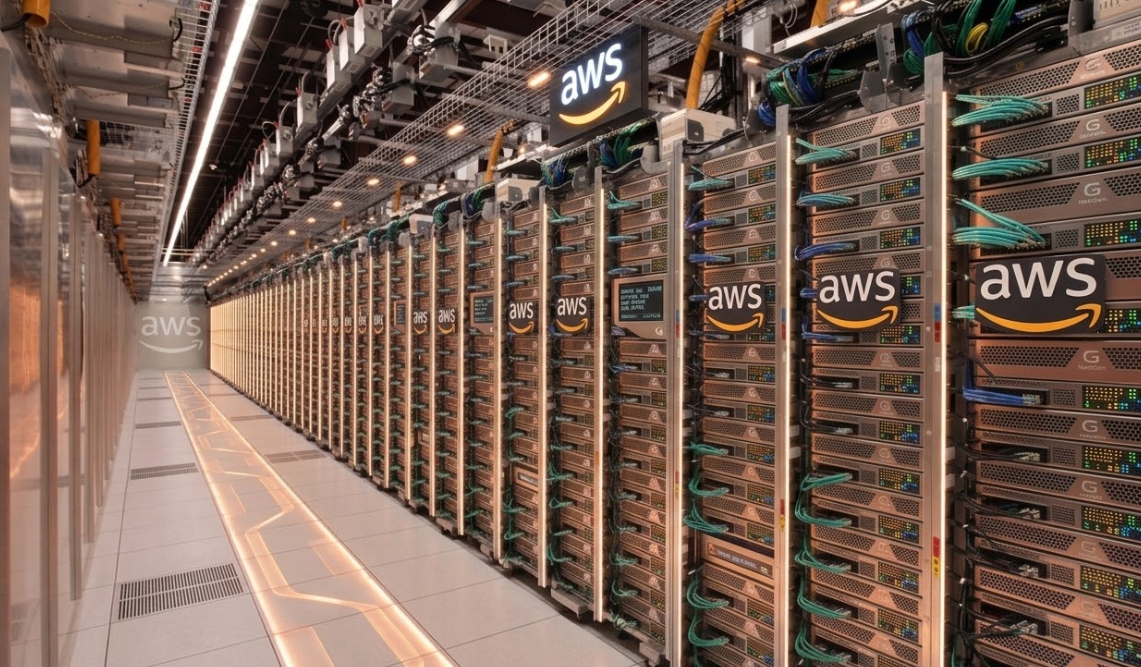
AWS Bahrain disruption has sparked global attention after Amazon confirmed that its cloud services in Bahrain were affected due to nearby drone activity. The unexpected incident disrupted operations for businesses relying on Amazon Web Services (AWS), highlighting growing concerns about cloud infrastructure security in sensitive regions.
What Happened: AWS Services Disrupted in Bahrain
According to reports, Amazon Web Services experienced a temporary outage in its Bahrain region following drone activity detected near its data center infrastructure. The disruption impacted multiple cloud-based services, causing downtime for businesses and applications relying on AWS in the Middle East.
Amazon stated that it took precautionary measures to ensure the safety of its infrastructure and customers. While services were gradually restored, the incident raised serious questions about how physical threats like drones can affect digital infrastructure.
Background: Growing Importance of AWS in the Middle East
AWS launched its Bahrain region to support growing demand for cloud computing in the Middle East. Many startups, enterprises, and government organizations depend on AWS for hosting, storage, and computing services.
With increasing digital transformation across the Gulf region, any disruption in cloud services can have a ripple effect across industries such as fintech, e-commerce, and logistics.
Reasons Behind the Incident
The disruption was linked to drone activity near critical infrastructure. While full details are still unclear, such incidents are often associated with security threats, surveillance risks, or regional tensions.
Drone-related risks have been rising globally, especially in areas with sensitive installations like data centers, oil facilities, and military bases. This incident shows how physical security threats are now directly impacting digital ecosystems.
Stakeholders and Industry Reactions
Amazon acted quickly to address the issue and restore services. Businesses affected by the outage expressed concern over downtime and potential financial losses.
Cloud customers in the region are now evaluating their disaster recovery strategies. Many experts are advising companies to adopt multi-region deployments to reduce dependency on a single data center.
Governments and regulators may also increase scrutiny of drone activity near critical infrastructure to prevent similar disruptions in the future.
Challenges Highlighted by the Disruption
This incident exposed several challenges in modern cloud infrastructure:
1. Physical Security Risks
Even highly secure cloud systems can be vulnerable to physical threats like drones or sabotage.
2. Downtime Impact
Businesses relying on cloud services faced interruptions, affecting customer experience and operations.
3. Limited Redundancy
Organizations using a single AWS region experienced more severe disruptions compared to those using multi-region setups.
Short-Term and Long-Term Impact
In the short term, companies experienced service outages and performance issues. Some businesses may have lost revenue due to downtime, especially in sectors like e-commerce and online services.
In the long term, this event could push companies to rethink their cloud strategies. Businesses may invest more in redundancy, backup systems, and hybrid cloud solutions.
Cloud providers like AWS may also strengthen their physical security measures and monitoring systems to prevent similar incidents.
Future Implications for Cloud Computing
The AWS Bahrain disruption highlights a new reality: cloud infrastructure is not immune to physical threats. As cloud adoption continues to grow, ensuring both digital and physical security will become essential.
Companies may adopt strategies like multi-cloud environments, edge computing, and stronger disaster recovery planning. Governments may also introduce stricter regulations around drone usage near critical facilities.
This incident serves as a wake-up call for the tech industry to address evolving risks in an increasingly connected world.
Learn More
For more insights on cloud and AI trends, read our guides on AI comparison between iOS and Android and how AI is replacing jobs.
Read the original report here: Reuters Source