






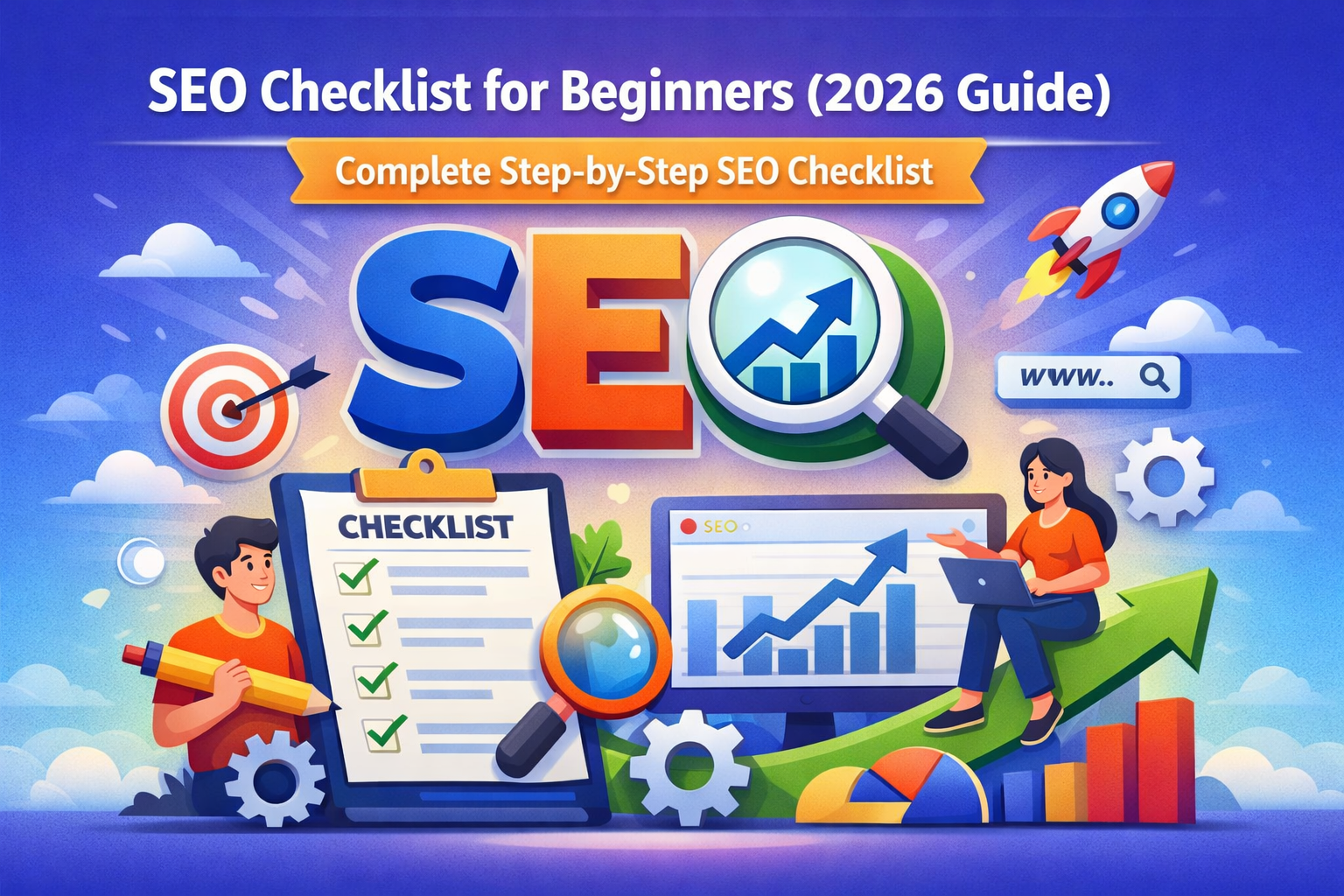
SEO Checklist for Beginners (Complete 2026 Guide)
Search Engine Optimization (SEO) is one of the most powerful digital marketing strategies for growing a website. Whether you run a personal blog, business website, affiliate site, or eCommerce store, SEO helps you attract visitors from search engines without paying for ads.
In 2026, SEO is more important than ever. Millions of websites are competing for attention on Google, and only the most optimized pages reach the first page of search results.
For beginners, SEO can feel confusing because it involves many different factors such as keyword research, content optimization, technical improvements, and link building. However, if you follow a structured process, SEO becomes much easier to understand and implement.
This guide provides a complete SEO checklist for beginners that will help you optimize your website step by step. By following this checklist, you can improve your search engine rankings, increase organic traffic, and build long-term online growth.
What is SEO?
SEO stands for Search Engine Optimization. It is the process of improving your website so that it ranks higher in search engine results.
When someone searches for information on Google, search engines analyze thousands of websites and show the most relevant pages.
SEO helps your website become one of those top results.
SEO includes several key elements such as:
- Keyword research
- Content optimization
- Technical website improvements
- Backlink building
- User experience improvements
When these elements work together, search engines can better understand your website and rank it higher.
Why SEO Is Important in 2026
SEO continues to evolve every year as search engines improve their algorithms. In 2026, SEO focuses heavily on content quality, user experience, and website performance.
Here are some major reasons why SEO is essential.
Organic Traffic Is Free
One of the biggest advantages of SEO is that it generates organic traffic without advertising costs. When your website ranks on the first page of Google, you can receive thousands of visitors every month.
Unlike paid ads, SEO traffic continues even when you stop spending money.
SEO Builds Long-Term Growth
Paid ads provide short-term traffic, but SEO creates long-term growth. A well-optimized article can continue bringing traffic for months or even years.
This makes SEO one of the most cost-effective digital marketing strategies.
Builds Authority and Trust
Users trust websites that appear at the top of search results. When your website ranks higher, it automatically builds credibility and authority.
High rankings show users that your website is reliable and valuable.
Better User Experience
Modern SEO focuses on improving user experience. This includes fast loading websites, mobile-friendly design, clear navigation, and helpful content.
Websites that provide a better user experience are rewarded with higher rankings.
Complete SEO Checklist for Beginners
To succeed in SEO, beginners should follow a structured process. This SEO checklist for beginners includes the most important areas of optimization.
Main SEO areas include:
- Keyword Research
- On Page SEO
- Technical SEO
- Content Optimization
- Link Building
- SEO Tools and Analytics
Each section plays a crucial role in improving your website’s search performance.
Keyword Research SEO Checklist
Keyword research is the foundation of SEO. If you target the wrong keywords, your content may never appear in search results.
Choosing the right keywords helps you attract the right audience and improve your chances of ranking.
Find Low Competition Keywords
Beginners should start with low keyword difficulty (Low KD) keywords because they are easier to rank.
Instead of targeting extremely competitive keywords, focus on keywords with moderate search volume and low competition.
Examples:
- SEO checklist for beginners
- beginner SEO guide 2026
- basic SEO tips for new websites
- how to start SEO for a website
These keywords have better ranking opportunities.
Use Long-Tail Keywords
Long-tail keywords are longer and more specific search phrases.
Example:
Instead of targeting:
SEO
Target:
SEO checklist for beginners 2026
Long-tail keywords usually have:
- Lower competition
- Higher search intent
- Better conversion rates
They are perfect for beginner websites.
Analyze Competitor Content
Before writing your content, analyze the top ranking pages for your keyword.
Check:
- Article length
- Content structure
- Keywords used
- Number of images
- Backlinks
This helps you understand what Google prefers for that search query.
Understand Search Intent
Search intent refers to the purpose behind a search query.
For example, someone searching SEO checklist for beginners wants a detailed guide with actionable steps.
Understanding search intent helps you create content that satisfies users.
On Page SEO Checklist
On-page SEO refers to optimizing the content and structure of individual pages.
Proper on-page optimization helps search engines understand your content.
Optimize SEO Title
The SEO title is one of the most important ranking factors.
Best practices:
- Include the primary keyword
- Keep the title under 60 characters
- Make the title engaging
Example:
SEO Checklist for Beginners (Complete 2026 Guide)
Write a Strong Meta Description
Meta descriptions improve click-through rate.
Best practices:
- Length between 140–160 characters
- Include primary keyword
- Explain the benefit of the article
A compelling description encourages users to click your result.
Use Proper Heading Structure
Headings help organize content.
Structure should follow:
H1 → Page title
H2 → Main sections
H3 → Subsections
This structure improves readability and SEO.
Optimize URL Slug
URLs should be short and keyword focused.
Example:
Good URL
website.com/seo-checklist-for-beginners
Avoid long URLs with numbers or unnecessary characters.
Use Keywords Naturally
Do not overuse keywords.
Instead:
- Add keywords naturally in headings
- Use related keywords
- Write for humans first
Search engines prefer natural language.
Optimize Images
Images make your content visually appealing.
SEO image optimization tips:
- Compress images for faster loading
- Use descriptive file names
- Add keyword-rich alt text
Example file name:
seo-checklist-guide.jpg
Optimized images can also appear in Google Image search.
Technical SEO Checklist
Technical SEO ensures that search engines can crawl and index your website properly.
Without good technical SEO, your content may struggle to rank.
Improve Website Speed
Page speed is a major ranking factor.
Ways to improve speed:
- Use fast hosting
- Compress images
- Enable caching
- Use CDN
Fast websites provide better user experience and lower bounce rates.
Make Website Mobile Friendly
Most users browse websites on mobile devices.
Your website should:
- Use responsive design
- Load quickly on mobile
- Have easy navigation
Google uses mobile-first indexing, making mobile optimization essential.
Use HTTPS Security
Secure websites rank better.
Install an SSL certificate so your website uses:
https://
This protects user data and builds trust.
Create XML Sitemap
An XML sitemap helps search engines discover your pages.
Submit your sitemap to:
Google Search Console
Bing Webmaster Tools
This improves indexing speed.
Fix Broken Links
Broken links harm user experience and SEO.
Regularly check your website for broken links and fix them.
Content SEO Checklist
Content is the most important element of SEO. High quality content attracts visitors, keeps them engaged, and earns backlinks.
Write Helpful Content
Your content should provide real value.
Good content should:
- Solve user problems
- Provide clear information
- Be well structured
Avoid writing content just for search engines.
Write Comprehensive Articles
Longer articles tend to rank better because they provide detailed information.
Recommended length:
1500 – 4000 words
However, quality always matters more than word count.
Improve Readability
Make your content easy to read.
Tips:
- Use short paragraphs
- Add headings
- Use bullet points
- Avoid complex sentences
Readable content improves user engagement.
Add Multimedia Content
Multimedia elements increase user engagement.
Examples include:
- Images
- Infographics
- Videos
- Charts
These elements improve the overall quality of your article.
Link Building SEO Checklist
Backlinks are one of the strongest ranking signals in SEO.
A backlink is when another website links to your site.
Focus on High Quality Backlinks
Quality matters more than quantity.
Good backlinks come from:
- Authority websites
- Relevant blogs
- Industry websites
Avoid spammy backlinks.
Guest Blogging
Guest posting on other websites helps build backlinks and brand awareness.
You can write articles for other blogs and include a link back to your website.
Internal Linking
Internal links connect different pages within your website.
Benefits:
- Improves website navigation
- Helps search engines crawl pages
- Passes link authority
Always link related articles together.
Directory Submissions
Submitting your website to trusted directories can provide additional backlinks.
However, avoid low quality directories.
SEO Tools Beginners Should Use
SEO tools make optimization easier.
Useful tools include:
Google Search Console
Google Analytics
Ahrefs
SEMrush
Ubersuggest
These tools help track performance, analyze keywords, and monitor backlinks.
Common SEO Mistakes Beginners Should Avoid
Many beginners make mistakes that harm their SEO performance.
Common mistakes include:
Keyword stuffing
Duplicate content
Slow website speed
Ignoring mobile optimization
Buying spam backlinks
Avoiding these mistakes improves long term rankings.

Final Thoughts
SEO may seem complex at first, but following a structured process makes it manageable.
By implementing this SEO checklist for beginners, you can gradually improve your website’s rankings and attract more organic traffic.
Remember that SEO is a long-term strategy. Results may take time, but consistent effort will bring strong growth.
Focus on creating valuable content, optimizing your website, and building authority through backlinks.
With patience and the right strategy, beginners can successfully rank their websites on Google in 2026 and beyond.
Continue Learning SEO and Digital Marketing
If you found this SEO checklist for beginners helpful, you may also want to explore more guides on our website. Learning SEO step by step will help you build a strong online presence and grow your website traffic consistently.
At GenzeBlog, we publish practical guides about SEO, blogging, affiliate marketing, and AI tools that help beginners start and grow successful websites.
You can continue learning with these helpful articles:
- Best Free Keyword Research Tools for Beginners – Learn how to find low competition keywords that can rank faster on Google.
- Affiliate Marketing with AI (Complete Beginner Guide) – Discover how artificial intelligence can help automate content creation and marketing.
- Free AI Tools for Social Media Content in 2026 – Explore powerful AI tools that help create optimized content for social platforms.
- How to Start a Blog and Make Money Online – A step-by-step guide for beginners who want to build a profitable blog.
These guides will help you improve your SEO skills, content strategy, and online marketing knowledge.
👉 You can explore more articles in our SEO and Digital Marketing section to continue learning.
Remember, SEO success comes from consistent learning, high-quality content, and proper optimization. Keep improving your website step by step, and over time you will see better rankings and steady organic traffic.