


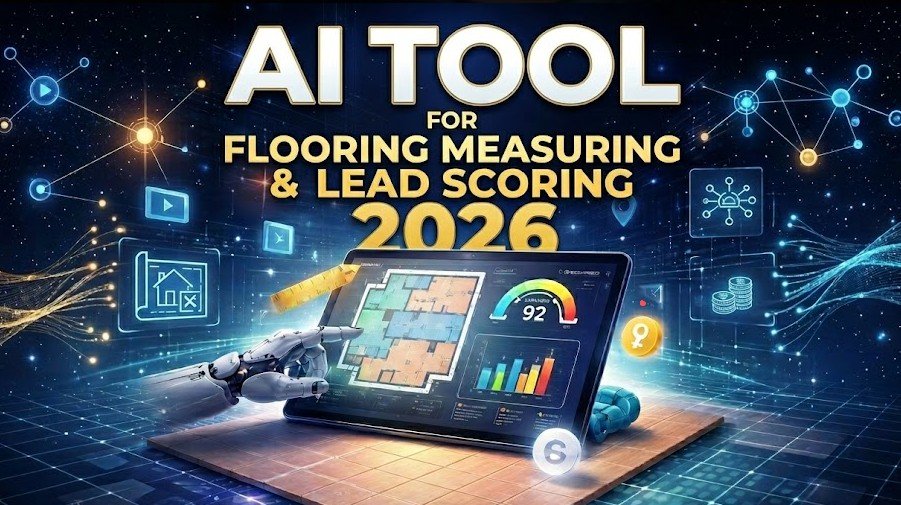



AI Tool for Flooring Measuring & Lead Scoring
An AI tool for flooring measuring lead scoring helps flooring businesses automatically calculate room or project measurements from photos or drawings and then prioritise which leads are most likely to convert. This type of AI combines computer vision for accurate square‑foot estimation with machine‑learning‑based lead scoring that ranks each customer by their buying intent, budget range, and project size. As a result, contractors, dealers, and flooring showrooms can focus their time and ad budget on high‑value opportunities instead of chasing low‑quality inquiries.
What Is an AI Tool for Flooring Measuring Lead Scoring?
An AI tool for flooring measuring lead scoring usually has two main parts:
- Flooring measurement engine: uses AI to read uploaded floor plans, room photos, or user‑drawn sketches and compute total square footage, material needed, and sometimes even subfloor conditions.
- Lead‑scoring layer: assigns each lead a numeric score based on how urgent, serious, and budget‑ready they are, using signals like page visits, time spent on estimate pages, form‑field data, and past customer patterns.
For example, a flooring dealer can integrate such a tool into their website. A visitor uploads a room photo or a simple sketch, the AI returns a preliminary measurement and material estimate, and the CRM or marketing automation system then tags that lead with a “high‑intent” score if they viewed multiple product pages, watched an estimation video, and completed the quote form.
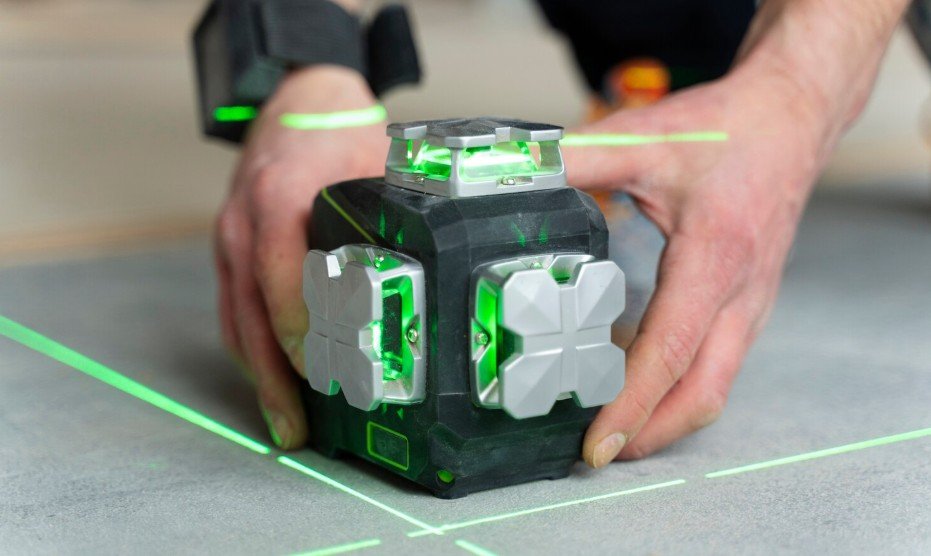
Why Flooring Businesses Need AI‑Driven Lead Scoring
Manual lead handling is slow and inefficient. Many flooring businesses receive dozens of “measure and quote” requests every week, but only a fraction actually convert. AI‑driven lead scoring ensures that sales teams contact the most promising prospects first, which improves close rates and reduces wasted time.
Faster Project Estimation and Better Quotes
Traditional quoting either requires an in‑person site visit or multiple back‑and‑forth messages to clarify room layouts. AI‑based flooring measurement tools can generate accurate room‑size estimates in seconds from user‑uploaded images or sketches, which lets companies send much faster preliminary quotes.
When a customer sees a quick, clear estimate, they feel the business is responsive and professional. This increases trust and makes them more likely to move forward, especially for online‑born leads who expect instant feedback.
Higher Conversion from High‑Intent Leads
AI lead‑scoring systems analyse behavior such as:
- How many pages a visitor viewed (homepage, product catalogs, estimate calculator, contact page).
- How long they stayed on estimate pages.
- Whether they uploaded a photo or completed the quote form.
- Historical data from past customers who had similar behavior and later converted.
Leads that trigger multiple of these signals get a high score. The system can then route them to a sales rep immediately via notification or automated email. Low‑score leads can be kept in a nurturing workflow instead of being ignored or pursued aggressively.
Reduced Sales Cycle and Lower CAC
When sales teams focus on high‑score leads, deals often close faster because these customers are already further along in their decision‑making process. Studies on AI lead‑scoring tools show that companies using predictive scoring can achieve significantly higher ROI on lead generation compared with those that rely only on basic manual scoring or no scoring at all.
At the same time, marketing spend becomes more efficient because campaigns can be optimised for leads that historically convert better. This lowers the effective cost per acquisition (CPA) over time.
How an AI Tool for Flooring Measuring Lead Scoring Works
Step 1 – Capture Floor Data
On a flooring website, the AI tool typically offers one or more input options:
- Photo upload: users take or upload pictures of rooms, corridors, or staircases.
- Simple sketch: users draw rough room outlines with a mouse or mobile gesture.
- Floor plan upload: users upload existing CAD or PDF‑style plans.
The AI uses computer‑vision techniques to detect walls, doorways, and odd shapes, then calculates total floor area in square feet or meters. Some advanced tools can even detect exposed subfloor or complex layouts and adjust the estimate accordingly.
Step 2 – Generate Material and Cost Estimate
Once the area is determined, the system can:
- Apply default waste factors (e.g., 10–15%) for the selected flooring type.
- Suggest material requirements (cartons of tiles, planks of wood, etc.).
- Show a rough price range based on the chosen product family and region.
These estimates are usually presented in a simple, visual format (charts, room‑by‑room breakdowns, or side‑by‑side product options) so the customer can compare options easily.
Step 3 – Assign a Lead Score
In the background, the AI scoring engine assigns a score to the visitor or lead ID using rules such as:
- Behavioral signals: page views, time on site, video watches, file uploads, form submissions.
- Demographic or firmographic data: if available, such as project size, location, or whether the visitor is a homeowner or contractor.
- Historical patterns: how similar past leads with this profile behaved (clicked calls, booked site visits, or became closed‑won customers).
Common scoring ranges are 0–100 or 0–10, where high‑score leads (e.g., 80+) are treated as “hot” and routed to sales immediately, medium‑score leads (40–79) are nurtured via email or chat, and low‑score leads (below 40) are either ignored or kept for long‑term retargeting.
Step 4 – Integrate with CRM and Workflows
Leading AI‑based lead‑scoring tools connect with common CRMs (e.g., HubSpot, Zoho, Salesforce) and marketing automation platforms. When a high‑score lead appears, the system can:
- Create or update a contact record with the new score and estimated project size.
- Trigger an automated email or SMS notification to the sales manager.
- Start a follow‑up sequence tailored to large‑project or high‑budget leads.
This integration allows flooring businesses to maintain a clean, centralised lead pipeline while still benefiting from AI‑driven prioritisation.

Key Features to Look For in an AI Tool for Flooring Measuring Lead Scoring
Accurate Measurement and Material Calculation
The core of the tool must deliver realistic measurements and material estimates. Look for:
- Support for multiple input types (photos, sketches, PDF plans).
- Automatic detection of complex shapes and multiple rooms.
- Options to adjust waste factors, product type, and layer thickness.
If the AI consistently under‑ or over‑estimates square footage, the credibility of your quotes and the trust of your customers will suffer.
Seamless Lead‑Scoring Engine
A good flooring‑focused AI tool should include or integrate with a predictive lead‑scoring engine that:
- Learns from your own historical conversion data.
- Uses both behavioral and demographic signals.
- Allows customisable rules (e.g., “add +20 points if user uploads a photo and views pricing page”).
Transparency about how scores are calculated is also important so your sales team understands why certain leads are prioritised.
Website and CRM Integration
The tool should plug easily into your existing stack:
- Website form integration so every quote request automatically gets a score.
- CRM sync so sales reps can see the lead score inside their contact view.
- Analytics dashboards showing conversion rates by score band (e.g., 0–39, 40–79, 80–100).
Without tight integration, the AI tool remains a nice “calculator” add‑on instead of a true lead‑scoring engine that drives real business outcomes.
Mobile and On‑Site Friendly
Many flooring leads are generated from job sites or mobile visits. A strong AI tool should:
- Work well on smartphones and tablets, with touch‑friendly sketching and photo upload.
- Allow field staff to take photos or sketches on‑site and send quick, AI‑powered estimates to customers.
This helps bridge the gap between initial inquiry and professional site visit, making the sales process feel continuous instead of fragmented.
Benefits for Flooring Businesses Using This AI Tool
Higher Quality Leads and Better ROI on Advertising
By combining accurate measurement with smart lead scoring, flooring companies can distinguish between “tire‑kickers” and serious buyers. Meta ads and Google Ads campaigns can then be optimised to reward leads that score highly, which improves overall campaign ROI.
For example, a flooring showroom can tag high‑score leads from Instagram ads and create a special nurture sequence for them, while low‑score leads are kept in a separate, lower‑priority funnel.
Improved Sales Team Productivity
Salespeople spend less time on low‑quality or early‑stage leads because the AI clearly highlights which contacts are most likely to close. This reduces wasted calls, emails, and follow‑ups on prospects that ultimately never convert.
Teams can also segment their outreach: high‑score leads receive immediate phone calls and personalised messages, medium‑score leads get periodic nurturing emails, and low‑score leads are put into educational content sequences until they show stronger intent.
Professional and Consistent Customer Experience
An AI tool for flooring measuring lead scoring helps present a modern, tech‑savvy image. Customers appreciate:
- Fast, accurate estimates without waiting for a site visit.
- Clear visual breakdowns of required materials and costs.
- Follow‑up from sales at the right time, not too early or too late.
This consistent experience builds trust and makes your brand stand out versus competitors who rely on manual measuring and paper‑based quoting.

How to Implement This AI Tool in Your Flooring Business
Step 1 – Define Your Ideal Customer Profile
Before deploying the AI tool, document your ideal customer profile (ICP):
- Homeowner vs. contractor vs. commercial client.
- Typical project size (small bathroom vs. whole‑house).
- Preferred flooring types (tiles, wood, vinyl, carpets).
This profile helps you configure the scoring logic so that leads matching your ICP get higher scores by default.
Step 2 – Choose the Right Platform
Evaluate flooring‑specific or B2B AI tools that:
- Offer AI‑based measurement and material estimation.
- Include or integrate with predictive lead‑scoring engines.
- Connect with your CRM and marketing tools.
Check for case studies or reviews from other flooring dealers or interior‑design businesses to see real‑world performance.
Step 3 – Configure Scoring Rules
Set up scoring rules aligned with your sales process:
- Behavior‑based rules: more points for multiple page visits, watched videos, uploaded photos, and form submissions.
- Fit‑based rules: more points for project size, location, or type that match your ICP.
- Negative scoring: deduct points for clearly non‑customer behavior (e.g., repeated test submissions or competitor‑like patterns).
Start with a simple rule set and refine it as you collect more conversion data.
Step 4 – Train Your Team and Set Up Workflows
Train your sales and marketing teams to:
- Trust the lead scores instead of relying only on gut feeling.
- Use the AI‑generated estimates as starting points for quotes, not as final numbers.
- Follow structured workflows for each score band (e.g., call within 10 minutes for 80+).
Automation such as email sequences, calendar invites for site visits, and reminders in the CRM will ensure that high‑score leads are never missed.
Step 5 – Monitor and Optimize
Track key metrics such as:
- Conversion rate by score band.
- Average time to first contact for high‑score leads.
- Cost per acquisition (CPA) before and after using AI scoring.
Continuous refinement of the AI model and scoring rules will help you gradually improve lead‑quality accuracy and close more flooring projects with less effort.
FAQs – AI Tool for Flooring Measuring Lead Scoring
Q1: What exactly is an AI tool for flooring measuring lead scoring?
This type of AI tool combines two capabilities:
- Flooring measurement: uses computer vision to calculate room areas from photos, sketches, or floor plans.
- Lead scoring: applies machine‑learning models to rank flooring leads by their likelihood to buy, based on behavior, demographics, and past customer data.
The result is a system that helps flooring businesses estimate projects faster and prioritise the best leads automatically.
Q2: How does the AI measure flooring from photos or sketches?
The AI analyses uploaded images or simple drawings to detect walls, corners, doors, and other room features. It then calculates the total floor area in square feet or meters and can adjust for waste and multiple rooms. Some tools also recognise exposed subfloor or complex layouts and refine the estimate accordingly.
This process is much faster than manual measuring and reduces human error in early‑stage quotes.
Q3: Can this tool work with my existing CRM and website?
Yes, most modern AI lead‑scoring and measurement tools are designed to integrate with popular CRMs (e.g., HubSpot, Zoho, Salesforce) and website platforms. When a visitor uses the flooring calculator, the system can push the lead data and score directly into your CRM and trigger follow‑up workflows.
If your current setup is custom or older, you may need basic API configuration, but many vendors provide documentation and support for this.
Q4: How accurate is the AI measurement compared to manual measuring?
AI‑based tools are generally quite accurate for standard room layouts. They can handle common shapes, multiple rooms, and even some complex geometries, though very irregular or poorly lit photos may reduce precision.
For critical projects, it is still wise to verify measurements on‑site, but the AI estimate serves as an excellent starting point for quotes and material planning.
Q5: How much can AI lead scoring improve my conversion rate?
Studies on AI lead‑scoring systems show that companies using predictive scoring can achieve significantly higher ROI on lead generation compared with those that do not use scoring or use only manual methods.
Exact improvement depends on your current process, but many flooring businesses report faster sales cycles, better lead‑quality focus, and higher close rates after implementing AI‑driven prioritisation.
Q6: Is this tool suitable for small flooring businesses or only big brands?
This type of AI tool is useful for all sizes, from small local dealers to large national chains. Small businesses benefit from faster quoting, better lead prioritisation, and more efficient use of limited sales staff time.
Many platforms offer tiered pricing or free trials, so you can start with a basic plan and scale up as your business grows.
Q7: Do I need technical skills to set up an AI tool for flooring measuring lead scoring?
Most vendors design their tools for non‑technical users, providing:
- Ready‑made website widgets or buttons.
- Simple configuration panels for scoring rules.
- Step‑by‑step guides for CRM integration.
If your website is custom‑built or you use specific plugins, you may need a developer for initial setup, but ongoing management can usually be handled by marketing or sales teams.
In 2026, businesses that adopt smart technology are gaining a clear competitive edge, and using an AI Tool for Flooring Measuring & Lead Scoring is becoming essential rather than optional. It not only improves accuracy in measurements but also helps prioritize high-quality leads, saving both time and resources. By integrating this kind of solution into your workflow, you can streamline operations, reduce errors, and close more deals efficiently. As the industry continues to evolve, investing in the right AI Tool for Flooring Measuring & Lead Scoring can play a key role in long-term growth and success.
If you’re exploring the latest in technology and AI, these guides cover everything from the iOS vs Android AI comparison in 2026 to the best free AI tools for students, along with insights into the most repairable tech gadgets of 2026 and powerful AI tools for small business marketing. Together, they give a clear and practical view of how AI is shaping devices, education, sustainability, and business growth in 2026, helping you stay updated and make smarter decisions in a rapidly evolving digital world.