




OpenAI Secures Pentagon AI Contract Through Amazon Cloud in 2026
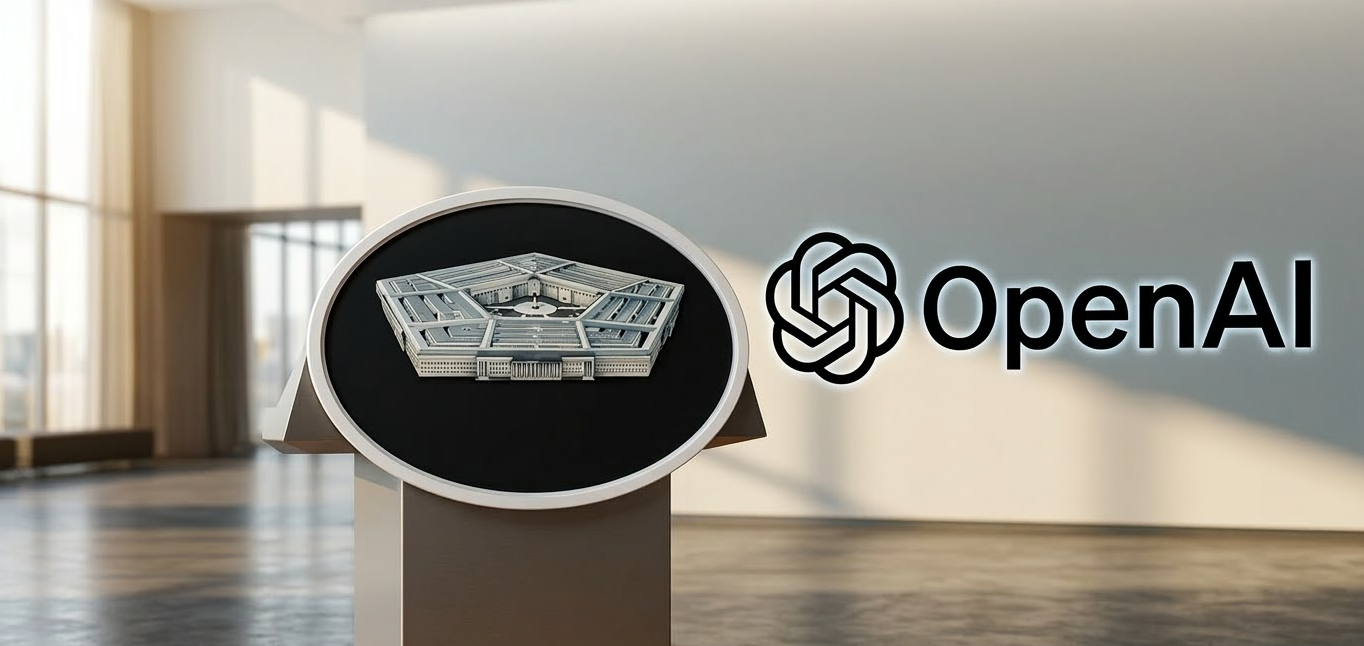
According to Reuters, OpenAI has officially secured a openai pentagon ai contract, allowing U.S. defense and government agencies to access its AI models through Amazon Web Services (AWS) cloud. This deal covers both classified and unclassified projects, reflecting OpenAI’s expansion into federal AI services and aligning with the website’s AI & tech news section.
This contract allows OpenAI to provide advanced AI models for applications ranging from defense analytics to operational simulations. By partnering with AWS, OpenAI taps into cloud systems already embedded in federal workflows, which can accelerate AI adoption across defense programs.
Replacing Anthropic as a Pentagon AI Supplier
Previously, Anthropic was a major supplier of AI technology for the Pentagon, with contracts worth up to $200 million in 2025. Anthropic’s AI, including the Claude models, was deployed in classified military and intelligence operations with support from AWS and Palantir.
However, the partnership ended in early 2026 after Anthropic refused unrestricted military use of its AI for certain applications, particularly autonomous weapons and domestic surveillance. The Pentagon subsequently flagged Anthropic as a “supply chain risk”, cutting the company off from future government contracts. This development paved the way for OpenAI to secure its openai pentagon ai contract and expand into classified projects.
Significance of AWS Partnership
OpenAI’s collaboration with AWS is not just a technical partnership but a strategic move. AWS has deep integrations with federal cloud systems, which makes it a key enabler for AI deployment in sensitive government environments. By using AWS, OpenAI can more easily comply with federal cybersecurity standards while delivering scalable AI services to the Pentagon.
This partnership also underscores the growing trend of AI companies leveraging cloud providers to enter high-stakes public sector contracts. By aligning with AWS, OpenAI gains a competitive advantage over other AI developers seeking federal projects.
How This Contract Benefits OpenAI and Corporate Clients
Securing a Pentagon contract enhances OpenAI’s reputation and signals reliability to large corporate clients. Many organizations view involvement in government projects, particularly defense and security applications, as a benchmark of trustworthiness. The openai pentagon ai contract could therefore open doors for OpenAI in commercial sectors such as finance, logistics, and cybersecurity.
Moreover, classified projects often require AI models that are robust, secure, and highly optimized. By fulfilling these requirements, OpenAI can demonstrate technical credibility to enterprise clients who may later adopt its AI for commercial applications.
Potential Implications for AI Policy and Ethics
The move also raises questions about AI governance. While OpenAI has previously focused on unclassified, ethical use cases, participation in military projects introduces complex debates around autonomous systems, surveillance, and ethical constraints. Observers and policymakers are closely watching how OpenAI balances innovation with ethical obligations.
In the wake of Anthropic’s withdrawal, OpenAI’s approach signals a willingness to provide more flexible AI services while maintaining compliance with federal regulations. This balance may become a model for other AI providers seeking government contracts.
Related Reading for AI & Tech Enthusiasts
- Best Free AI Tools for Students in 2026
- Apple MacBook vs Windows Laptops – Full Comparison
- How to Make Money with AI Tools in 2026
Sources & References
Conclusion
OpenAI’s openai pentagon ai contract marks a pivotal moment in the intersection of AI technology, defense, and cloud infrastructure. By leveraging AWS for classified and unclassified projects, OpenAI not only strengthens its position in the federal sector but also signals reliability to corporate clients. As AI continues to shape both public and private sector innovation, contracts like these are set to define the future landscape of AI adoption in high-stakes environments.
For more insights on AI-driven defense contracts, emerging technologies, and industry updates, explore our AI & Tech section.