






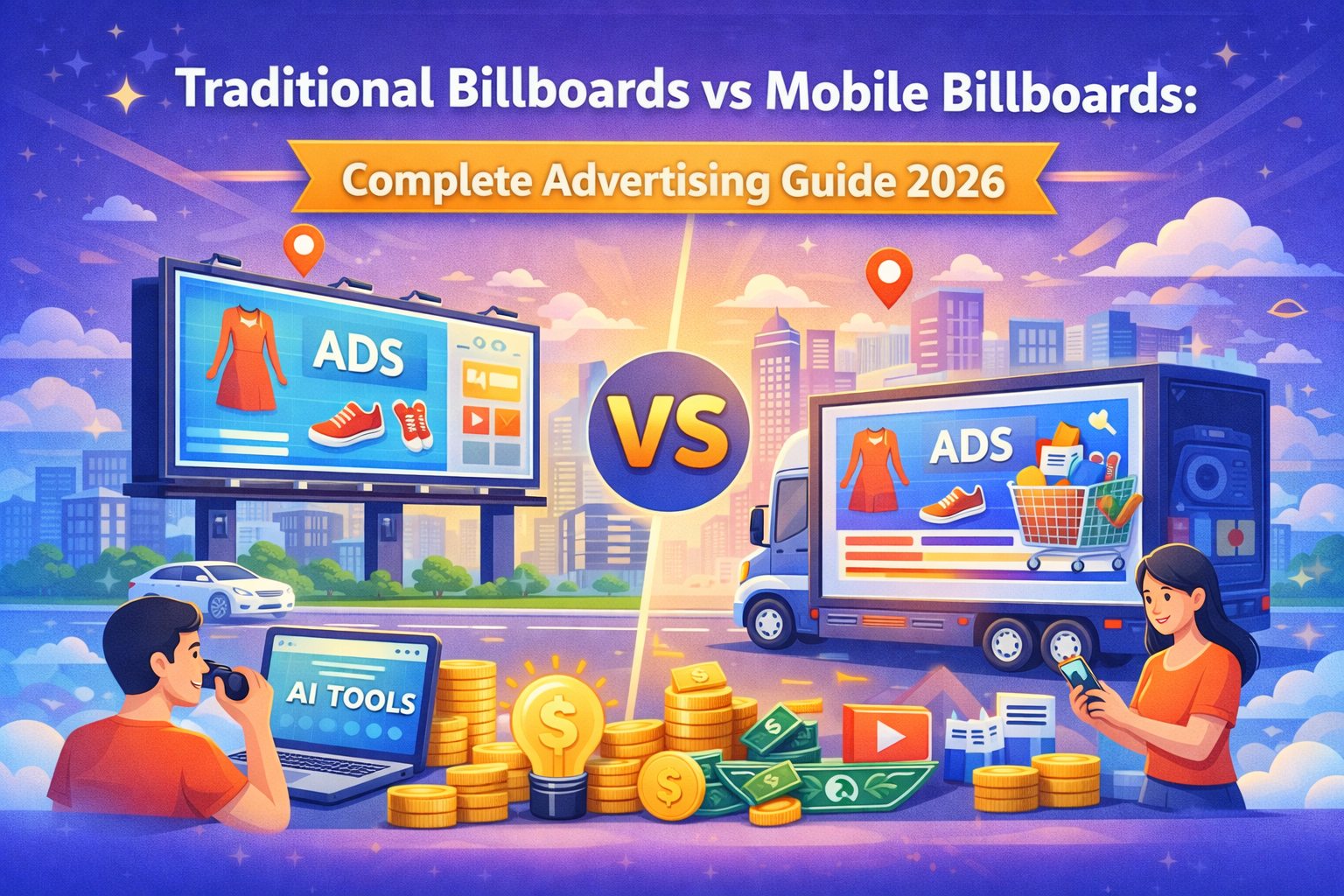
Traditional Billboards vs Mobile Billboards – Complete Advertising Guide 2026
In 2026, businesses have more options than ever for outdoor advertising. Among the most popular methods are traditional billboards and mobile billboards. While both aim to attract attention, each has unique advantages, limitations, and costs.
This guide will help you understand traditional billboards vs mobile billboards, covering key differences, costs, ROI, engagement, future trends, and actionable marketing strategies. Whether you’re a small business owner or a marketing professional, this article will help you choose the best advertising option for your goals.
Understanding Traditional Billboards
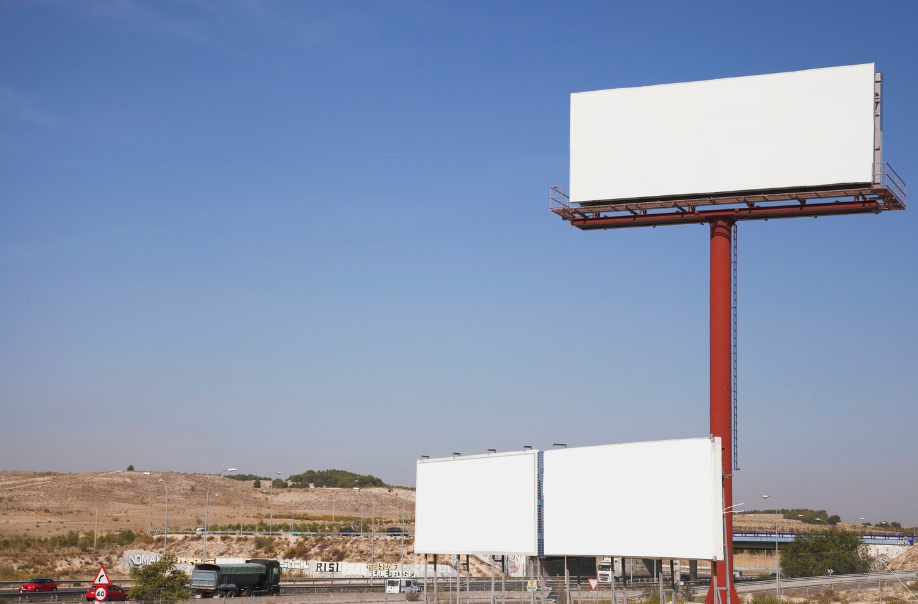
Traditional billboards are fixed outdoor advertising structures, usually large and placed along highways, busy streets, or city centers.
Key Features of Traditional Billboards
- Fixed location: Positioned in high-traffic areas for constant exposure.
- Large format: Designed to capture attention from a distance.
- Leased long-term: Advertisers typically rent space monthly or yearly.
- Static or digital: Traditional billboards may be printed static images or digital displays.
Advantages of Traditional Billboards
- Constant Visibility – Reaches thousands of commuters daily.
- Brand Recognition – Long-term presence improves brand awareness.
- Simplicity – Easy for businesses to design and display without changing locations.
Limitations of Traditional Billboards
- High upfront costs, especially in premium locations.
- Fixed location may miss certain target demographics.
- Limited flexibility for campaign changes once installed.
Understanding Mobile Billboards
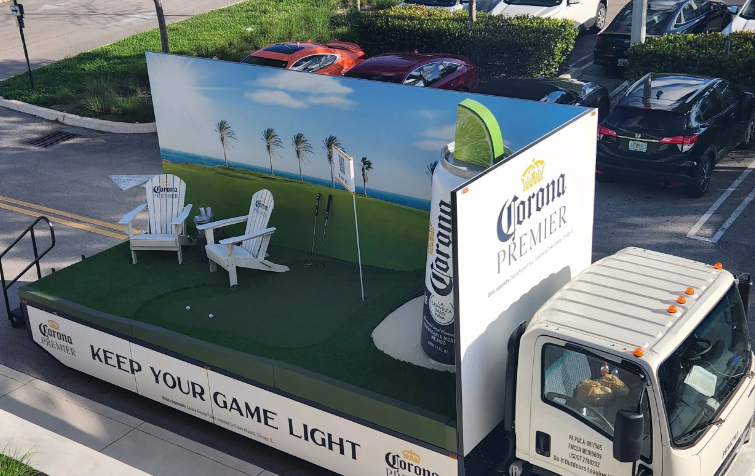
Mobile billboards are advertising vehicles, including vans, trucks, and trailers, which display ads while moving in selected areas.
Key Features of Mobile Billboards
- Mobile and flexible: Can reach multiple locations and neighborhoods.
- Attention-grabbing: Movement naturally attracts viewers.
- Short-term campaigns: Ideal for events, launches, or seasonal promotions.
Advantages of Mobile Billboards
- Targeted exposure: Deliver ads to specific areas or demographics.
- High engagement: Moving ads stand out more than static ones.
- Flexible campaigns: Duration, route, and locations can be customized.
Limitations of Mobile Billboards
- Limited exposure time per viewer.
- Requires vehicle management and drivers.
- Potential higher cost per impression compared to static billboards in some cases.
Traditional Billboards vs Mobile Billboards – Detailed Comparison
| Feature | Traditional Billboards | Mobile Billboards |
|---|---|---|
| Location | Fixed, high-traffic areas | Flexible, targeted zones |
| Visibility | Continuous exposure | Shorter, moving exposure |
| Cost | Higher upfront | Flexible, pay per campaign |
| Engagement | Passive | Active, eye-catching |
| Flexibility | Low | High – routes can be changed |
| ROI | Long-term brand building | Quick, targeted results |
Costs and ROI in 2026
Understanding costs and expected ROI is crucial for advertisers in 2026.
Traditional Billboards
- Small locations: $1,500–$3,000 per month
- High-traffic urban areas: $5,000–$10,000+ per month
- Digital billboards: Can cost $15,000–$25,000 per month for prime locations
ROI: Effective for brand recognition and repeated impressions. Best for long-term campaigns.
Mobile Billboards
- Single-vehicle campaign: $500–$3,000 depending on route and duration
- Multiple vehicles / city-wide campaigns: $5,000–$10,000
- Additional costs: Drivers, insurance, maintenance
ROI: High for targeted campaigns, local events, and product launches.
Engagement and Audience Reach
Traditional Billboards
- Reach commuters and pedestrians in high-traffic areas.
- Repeated exposure builds brand familiarity.
- Best for products targeting broad demographics.
Mobile Billboards
- Reaches targeted neighborhoods or event attendees.
- Movement increases attention and memorability.
- Ideal for businesses targeting specific audiences, like local restaurants or events.
Case Studies: Real-World Examples
Traditional Billboard Example
A retail chain in London used digital billboards along main highways for 3 months. The campaign increased store visits by 25% and online inquiries by 15%.
Mobile Billboard Example
A local food festival in Manchester employed 3 mobile billboard vans for 1 week. Social media mentions increased by 40%, and ticket sales rose by 30% during the campaign.
Which One Should You Choose?
Choose Traditional Billboards If:
- You want long-term brand visibility.
- Targeting high-traffic, broad audience areas.
- Budget allows for fixed, high-cost placements.
Choose Mobile Billboards If:
- Running short-term or seasonal campaigns.
- Targeting specific neighborhoods or demographics.
- You want flexibility and high engagement.
Hybrid Advertising Strategies
Many businesses in 2026 combine both traditional and mobile billboards:
- Use traditional billboards for long-term brand presence.
- Use mobile billboards to drive local engagement during events.
- Digital integration allows tracking impressions and campaign analytics.
Future of Outdoor Advertising in 2026
- Digital transformation: Static billboards increasingly converted to digital.
- Analytics-driven campaigns: Mobile billboards can track location, time, and impressions using GPS.
- Interactive experiences: QR codes and AR features on mobile and digital billboards.
- Sustainability: Electric-powered mobile billboards reduce carbon footprint.
Outdoor advertising works even better when combined with digital marketing strategies like SEO and AI-driven marketing. If you want to learn how to grow online traffic, read our detailed guides on SEO strategies and affiliate marketing available on GenzeBlog.
FAQs
Q1: Which has higher ROI – traditional or mobile billboards?
It depends on goals. Traditional billboards are better for long-term branding; mobile billboards are more cost-effective for targeted campaigns.
Q2: Are mobile billboards more engaging than traditional ones?
Yes, the movement attracts more attention, especially in crowded urban areas.
Q3: Can I combine both types in one campaign?
Absolutely. Hybrid campaigns often deliver the best results.
Q4: What is the average cost of advertising with a mobile billboard in 2026?
$500–$3,000 per campaign, depending on route, duration, and vehicle count.
Q5: Are digital traditional billboards more effective than static ones?
Yes, digital billboards allow animation, rotation of multiple ads, and better tracking metrics.
Q6: Are mobile billboards effective for local businesses?
Yes, mobile billboards are very effective for local businesses because they can target specific neighborhoods, shopping districts, or event locations where potential customers are present.
Q7: How long should a billboard advertising campaign run?
Most traditional billboard campaigns run for at least 4–12 weeks to build strong brand recall. Mobile billboard campaigns can be shorter, usually 1–2 weeks, depending on the marketing goal.
Q8: Do billboards still work in the digital marketing era?
Yes, outdoor advertising remains highly effective. Billboards complement digital marketing by increasing brand awareness and supporting online campaigns.
Q9: Can billboards increase online traffic?
Yes. Many brands add QR codes, website URLs, or social media handles on billboards, which can drive online traffic and increase brand engagement.
Q10: What industries benefit most from billboard advertising?
Industries such as real estate, restaurants, events, retail stores, entertainment, and local services benefit significantly from billboard advertising because they rely on local audience visibility.
Final Verdict
Both traditional billboards vs mobile billboards have advantages and limitations:
- Traditional billboards: Best for long-term brand visibility and repeated exposure.
- Mobile billboards: Best for targeted campaigns, events, and high engagement.
In 2026, combining both approaches often gives the maximum ROI, helping businesses reach a wider audience while maintaining flexibility.
Outdoor advertising platforms such as JCDecaux and Clear Channel Outdoor continue to innovate with digital billboards and data-driven advertising solutions.